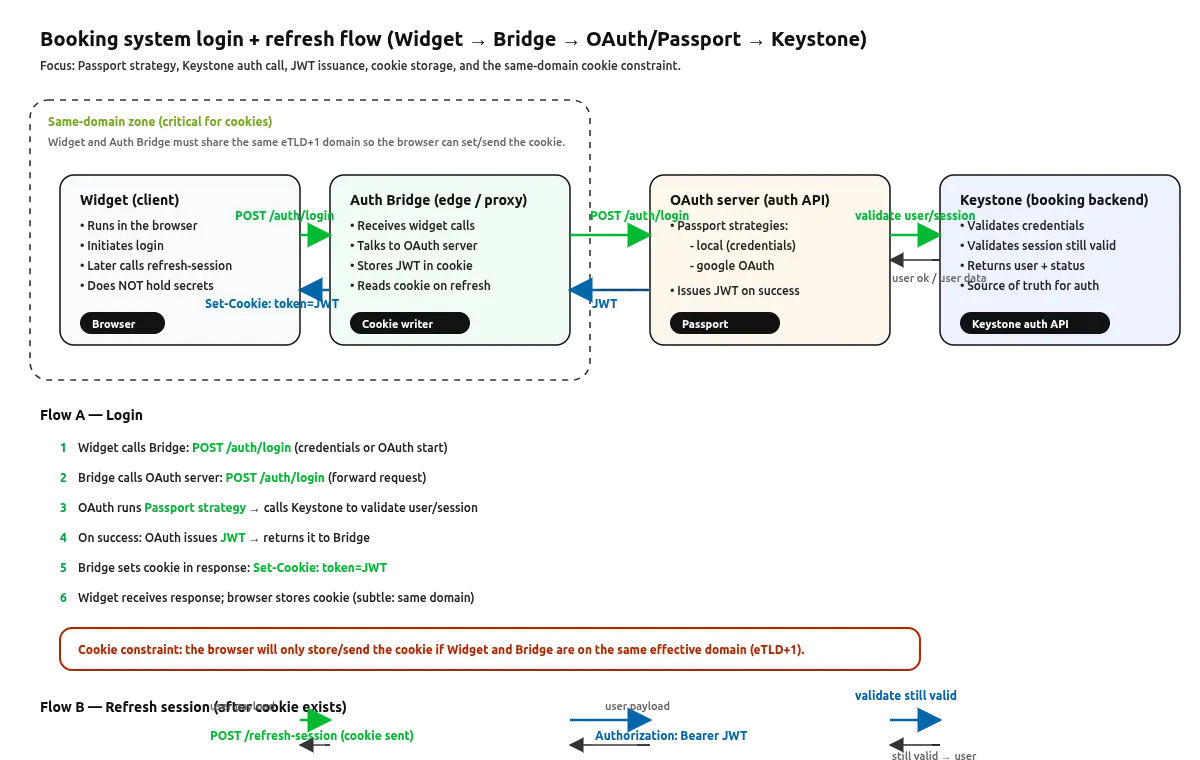
Login Is Easy. Reusing It Isn’t
How the Same OAuth Architecture Powers Next.js and Embedded Widgets
Authentication is rarely the hard part.
Most modern stacks can implement a login flow using Passport, OAuth, and JWT in a matter of hours. Where systems start to break down is when that login needs to live beyond a single application.
This article compares two real implementations that use the same authentication core, yet operate in very different UI environments:
- A Next.js application
- An isolated, embeddable widget architecture (ReactEdge)
The goal is not to compare frameworks, but to show what actually changes — and what doesn’t — when UI boundaries move.
The shared authentication core
Both implementations rely on the same two backend components: a Keystone backend (data, users, session validity) and a standalone OAuth Express server owning Passport and JWT issuance.
These components are unchanged whether the UI is a full Next.js app or an embedded widget.
👉 If you want a detailed walkthrough of this setup in a Next.js context, it’s covered in depth here:
Implementing Login in a Next.js App with Passport, JWT, and DDD
That article explains why Next.js makes this architecture feel straightforward.