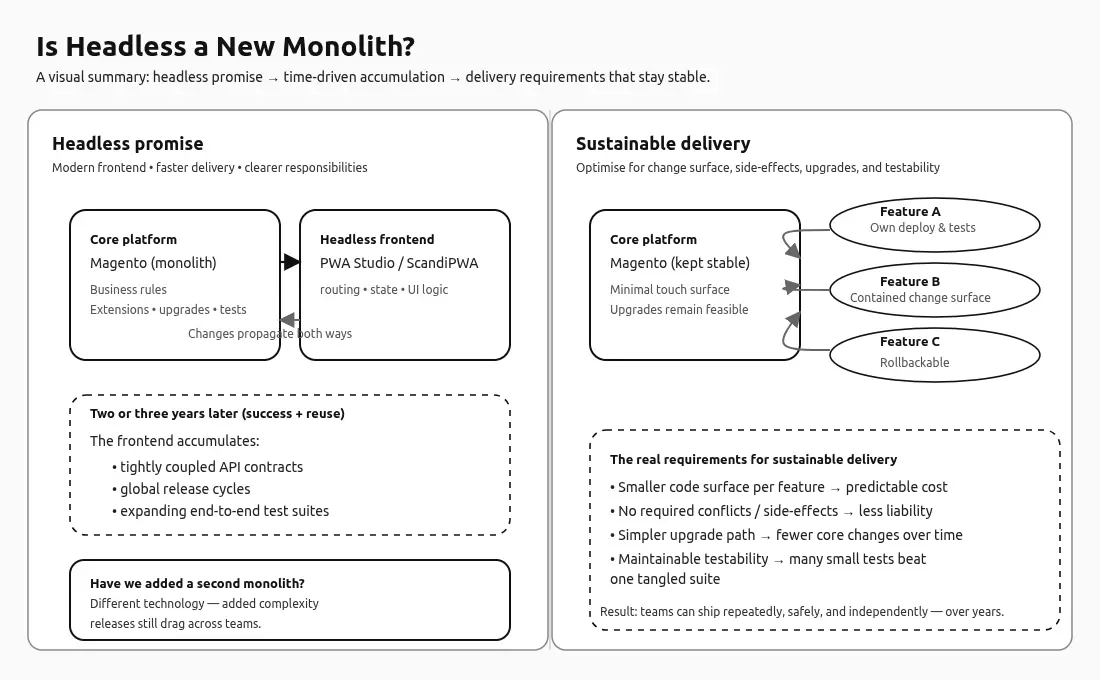
Does Headless Simplify Delivery?
Headless was supposed to set teams free.
Modern frontend, faster delivery, fewer constraints.
And at first, it often does.
But something happens as systems grow.
The promise that sold headless
Headless was supposed to set teams free.
Modern frontend, faster delivery, fewer constraints.
Frameworks like PWA Studio, ScandiPWA, and others that followed genuinely delivered on that promise.
Back in 2018, they were a big step forward: clearer boundaries, modern tooling, better developer experience.
Why headless hasn’t been the holy grail we expected
Headless has resolved what it is good at: separating concerns to simplify frontend and backend issues. However, releases remain complex, and dependencies too often drag delivery and prevent marketing and development teams from pushing what matters independently of each other.
Headless solutions bring new complexity. They appear as yet another evolving solution that has the same constraints to monolith.
Have we added a second monolith?
The real requirements for sustainable delivery
Below is a practical recipe for delivering what e-commerce teams actually need. Instead of the current “holistic” approaches we find at our disposal, I have gathered a more hands-on list, aiming to help the teams at the place where they need
- A smaller code surface per feature, so changes remain understandable and their cost is predictable.
- No required conflicts, features add values without creating liability
- A simpler upgrade path, because fewer changes touch the core system over time.
- More maintainable testability, since testing many small, independent features is easier and more reliable than testing them all once they have been merged and tangled together.
These requirements are not theoretical.
They describe the conditions under which teams can ship repeatedly, safely, and independently — over years, not just at the start of a project.