CI/CD with Decoupled Widgets
How We Turned Releases into a Reversible Configuration Change
Modern release pipelines look sophisticated, but risk remains high because deployments are still coupled to the core system.
With decoupled widgets, we changed the deployable unit—from the platform to the feature.
Local Development: One Widget, One Reality
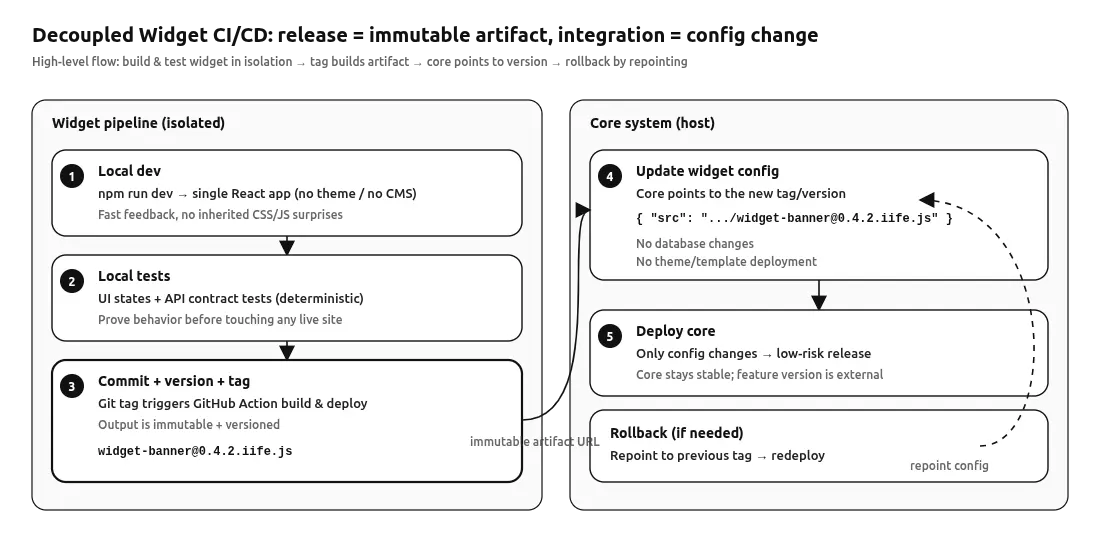
Each widget is developed and run locally as a standalone feature, without CMS, theme, or platform assumptions.
What works locally works everywhere, because the environment is minimal, controlled, and identical.
Release as an Immutable Artifact
A Git tag triggers a build that produces a single, versioned JavaScript file that never changes.
That file is the release: immutable, referenceable, and always rollbackable.
Deployment and Rollback as Configuration
The core system is never modified—only a configuration file is updated to point to a new widget version.
Rollback is simply repointing that URL and redeploying, turning releases into safe, routine changes instead of risky events.
Final Thought
Decoupled widgets don’t just improve frontend performance.
They redefine deployment risk.
When the only thing that changes in production is a versioned URL, releases stop being events—and start being routine.
That’s not faster CI/CD.
That’s safer software by construction.